
For many years, I served as a camp counsellor and director at Killdevil Camp. Anyone who has been to a summer camp knows that camp songs, most often with actions, are de rigueur. You sing on waking up, before meals, during the day, and in the evening! One of the songs that the campers inevitably requested during chapel time was “The Community Song,” and it was accompanied by actions. The lines were simple, beginning with the verse, “It’s you, it’s you, it’s you who builds community,” adding, in subsequent verses, “me,” “us,” “love,” and “God” so that the last verse says, “It’s you, it’s me, it’s us, it’s love, it’s God who builds community,” and the last line says, “Go and do your part to build community.”
It’s a simple song, yet it holds a profound message. It upholds the value of community and emphasizes our role, exercised in the love of God within us, in building that community. It also holds implications for Church life.
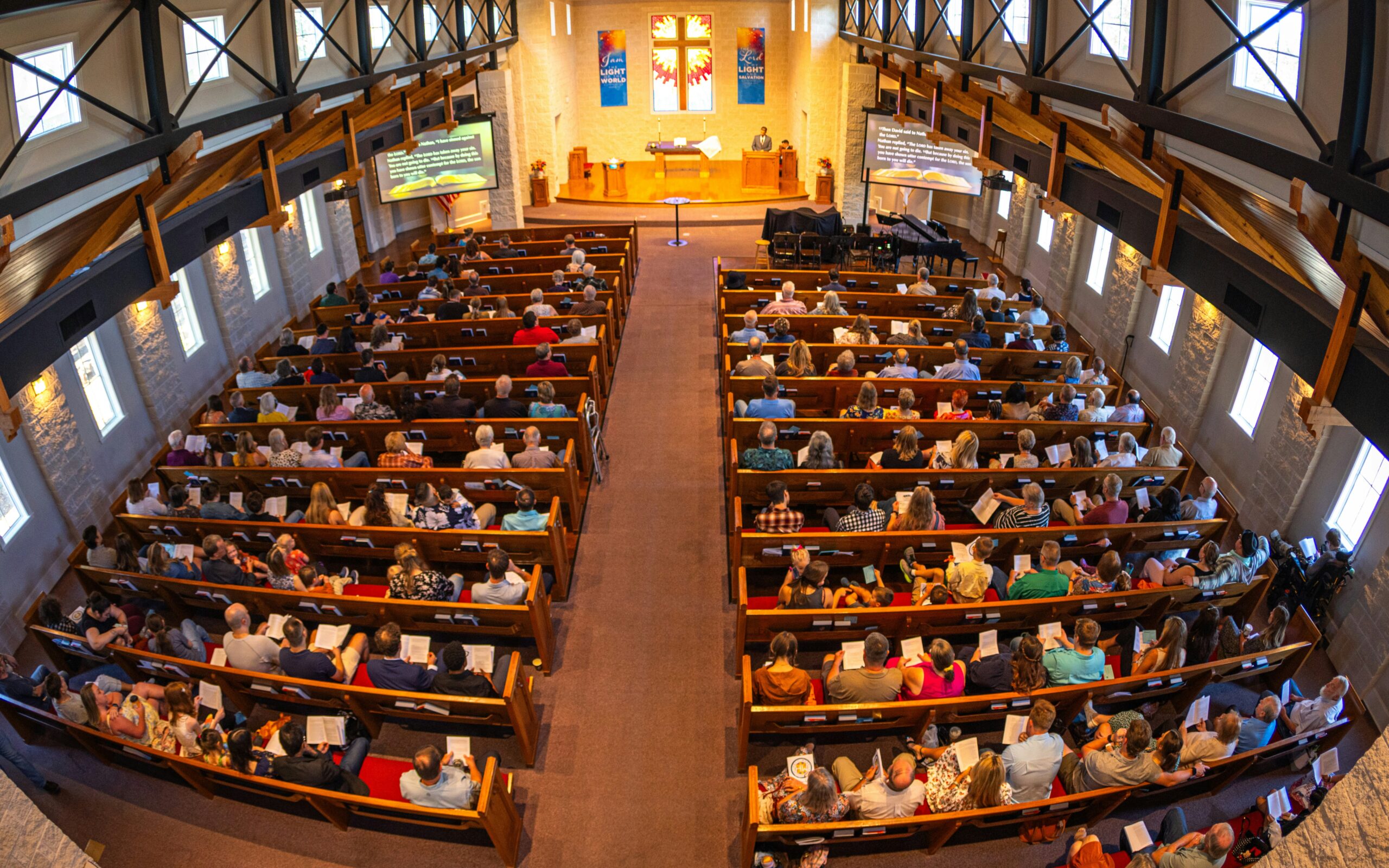
A friend of mine recently reflected, “As the world becomes increasingly impersonal, the Church must become more personal.” I would add that in a world where pretty much anything and everything can be accessed through your laptop or tablet, the Church has to consider what it has to offer. Gathering in community helps the Church become more personal and allows us to be together in a way that is incarnational.
This is not to reduce the Church to a service-based industry but to ask the simple question, “What can you find in a Church setting that cannot be accessed from the comfort of your home and which helps foster a sense of belonging?” Because, let’s face it, online, you can pray, watch a worship service, listen to a sermon, hear good inspirational music, and even interact with a community of others. So why gather?
Simply put, there is an added dimension when you gather which is intangible, yet real. As we gather in community, as we work to develop that community, the Spirit moves. We worship and come together as unique individuals who may disagree and rub each other the wrong way from time to time, but that doesn’t make us any less a part of the community, nor does it diminish our connection. Rather, we become greater than our individual parts. As Paul says, “if the ear were to say, ‘Because I am not an eye, I do not belong to the body,’ that would not make it any less a part of the body… The eye cannot say to the hand, ‘I have no need of you’ … If one member suffers, all suffer together with it; if one member is honoured, all rejoice together with it. Now you are the body of Christ and individually members of it.”(1 Corinthians 12:16, 21a, 26-27)
That is not something that is done in isolation; for it to happen, we need to gather in community, and through God’s Spirit, we live into the mystery that is the body of Christ.