
I am a child and an adult of the Church, and possibly a dying breed.
Over the years, I have seen many of my peers step away from their faith and church communities. Some left when they were let down by leadership. Others left when the values no longer aligned with their own growth. More left because the Church no longer felt like the “safe” space that it promised to be.
Many of these same folks have asked me how I seem to find resilience in my faith, knowing that I have almost followed their paths for those same reasons, and on many occasions. My answer will vary in a given moment, but generally follows two themes: an assurance that being a part of church is God’s plan for me, and that only vague threads of hope keep me present.
The truth is that I have had to stop and ask myself some very tough questions, many of which have pertained to what it means to be a part of a church community. This has meant times of deep introspection, coupled with examining old rhetoric and practices in an effort to see where I still fit.
But is there room for intellectual exploration in an institution that has thrived for so long on traditions?
I certainly hope so. And I believe that the Jesus I have come to know would agree.
The New Testament is peppered with stories of Jesus standing up to those in power, demanding that they reconsider how clinging to their messages was falling short of the humanity in front of them. He asked for more than blind acceptance from those who were guiding others. Jesus asked us to see the real life world of the Kingdom as it existed in the here and now, highlighting that authentic interactions are a staple in loving others.
The Church may feel safe to many of you reading this, and if so, I am happy for you. However, for those of us, like me, who have faced criticism for examining how the Church is actually living out the teachings of Jesus, I haven’t always felt that same security. My experiences have been different and unique to me.
So, how have I managed to stay in a community where I haven’t always felt free to be myself? It is because I have had to rework my understanding of the spaces I want to be a part of. What is “safe” for one person inherently cannot be “safe” for another person. Any given statement, regardless of intention, can have a negative impact based on past triggers, traumatic experiences, and the effects of systemic inequities.
Trying to maintain a traditionally “safe” space, one where no one feels offended or hurt, is categorically impossible. It also runs the risk of excessive caution, inaction, and silence. “Safe spaces” become spaces where comfort is placed on a pedestal instead of authenticity.
So, I challenge us in the Church to consider a new alternative: “brave spaces.”
“Brave spaces” are compelling because they encourage participants to engage with diverse perspectives to stretch our understanding of the world around us. People are asked to embrace the discomfort of opposing view points and difficult conversations in an effort to more deeply understand others. The goal is to foster more meaningful connections in which people can be seen for who they are. Individuals can feel free to discuss long-standing biases, systemic injustices, and more without fear of judgment or attack.
It is my hope that in revisiting what is possible when we truly live in communion with each other, the Church might expand its reach. In a world where negative public discourse and injustices have become a prominent part of the day-to-day, why not revisit what a genuinely supportive body of faith looks like?
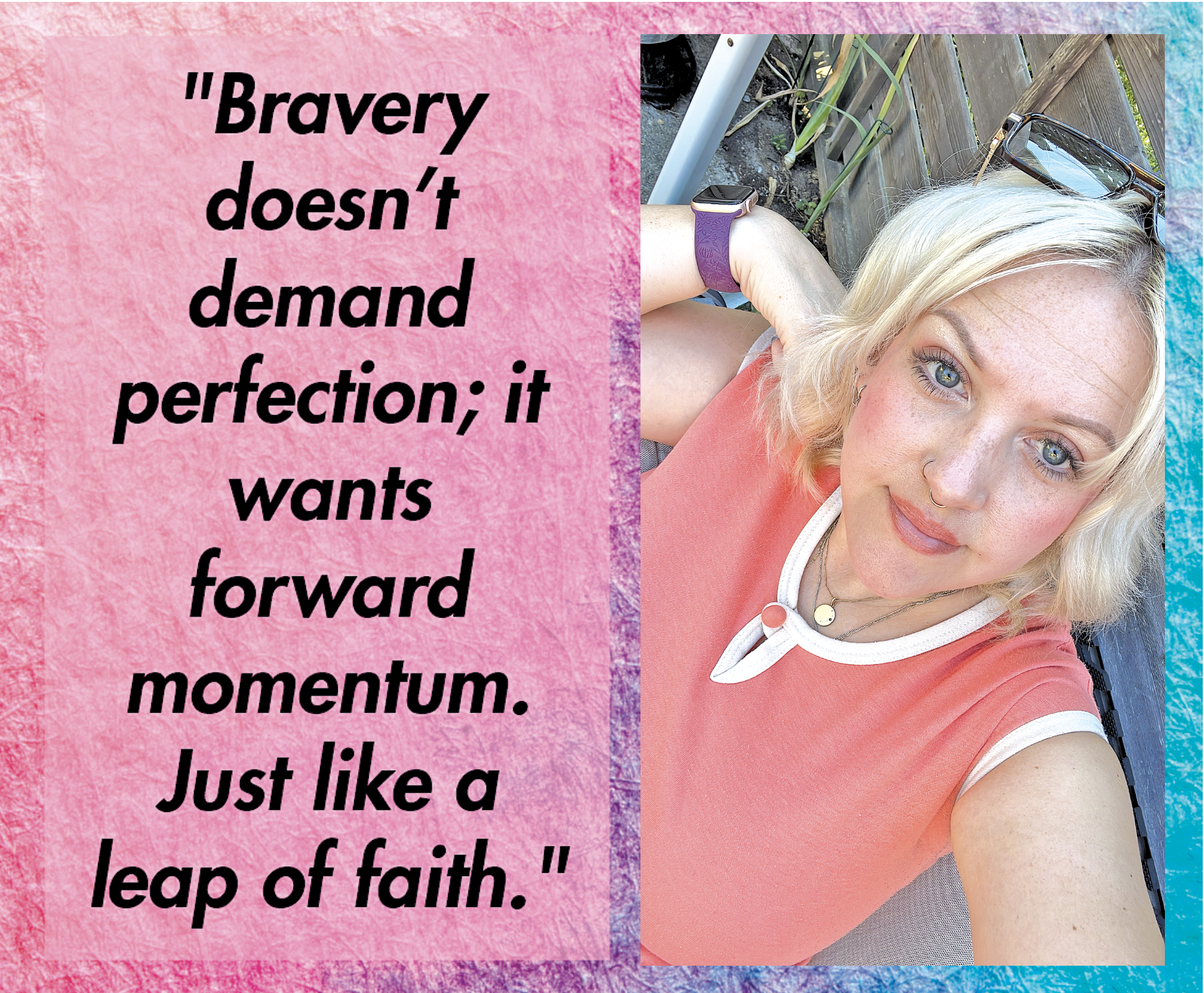
Finding courage to change can feel intimidating. Yet we forget that being brave isn’t finding an absence of fear, but rather is found in being scared but doing it anyway. Bravery doesn’t demand perfection, it wants forward momentum. Just like a leap of faith.
I am willing to leap into uncertainty and discomfort in order to be brave. Are you?
Felicity Barons grew up in Labrador, and currently lives in Toronto